NREL Visitor Experience
In this case study, I highlight my work developing a large-scale interpretive display that visualizes the hydrogen energy process at NREL’s Flatirons Campus. As the lead designer
I collaborated with researchers, engineers, architects, and the communications team, I helped transform a complex research environment into a clear, story-driven experience that engages audiences from visitors to key decision-makers.
Hydrogen Systems Display
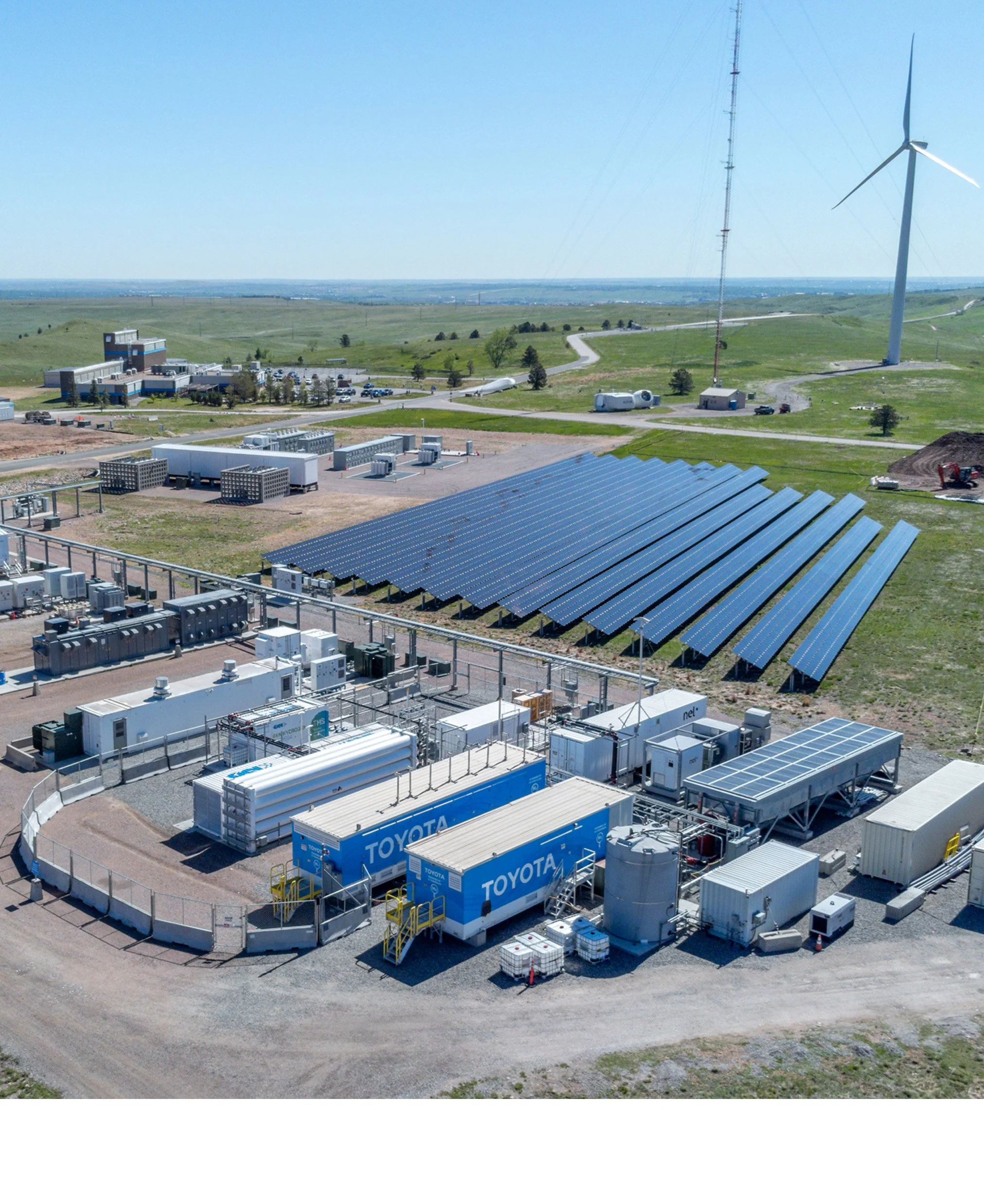
As part of the Advanced Research on Integrated Energy Systems (ARIES) initiative, this project supports the development of hydrogen system capabilities at NREL’s Flatirons Campus, including a megawatt-scale electrolyzer, hydrogen storage system, and fuel cell generator. The goal of the project was to create an educational and visually engaging display that explains how these technologies integrate to produce and store clean hydrogen energy. This infrastructure serves as a testbed for advancing integrated energy research, enabling studies on grid services, renewable hydrogen production, and systems integration. The display illustrates how these systems work together to demonstrate the science of scaling clean hydrogen technologies and their role in achieving a sustainable energy future.
Creating a Structural Concept
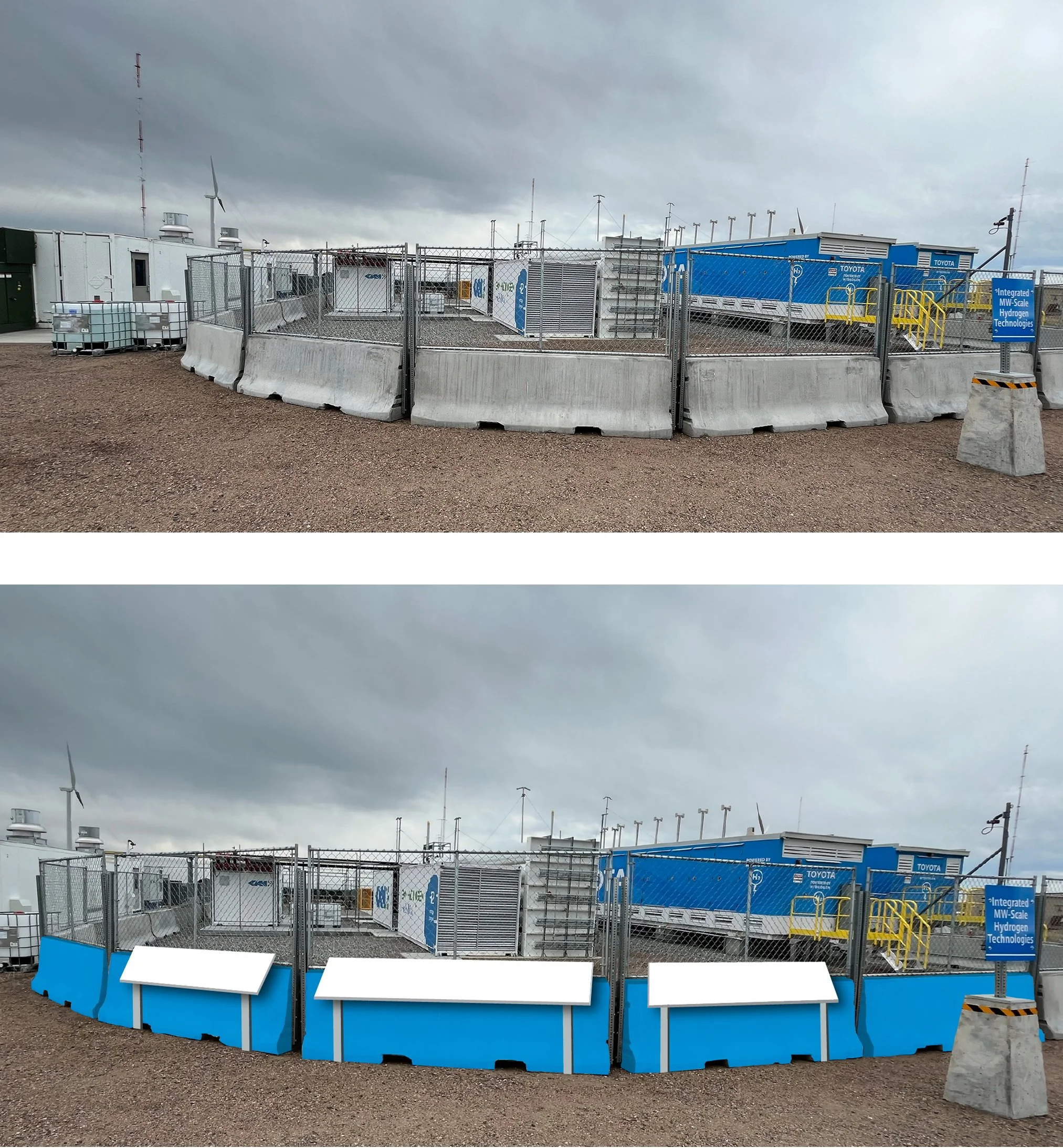
In this early phase, I collaborated with researchers, engineers, architects, the communications lead, and the site tour team to define project goals and constraints. By visualizing the structure and layout concept, I helped the team see how the display could come to life, aligning everyone around a shared vision and gaining full support from researchers, leadership, and technical staff to move the project forward.
Visual Design Development

After the structural concept was approved, I began developing the visual design elements that would bring the display to life. Working closely with researchers, the communications team, and other designers on the visitor experience team, I created renderings to show how the graphics would tell the story and integrate with the physical structure. This phase involved exploring multiple design directions and producing several iterations until we reached a solution that was approved by all stakeholders.
During this stage, engineers and the site architect began developing the specifications and drawings for the custom signage that would be fabricated and installed along the barriers. Our teams worked closely to ensure that the design intent, materials, and dimensions aligned seamlessly with the visual concept and met all safety and structural requirements.
Creating the Design Elements
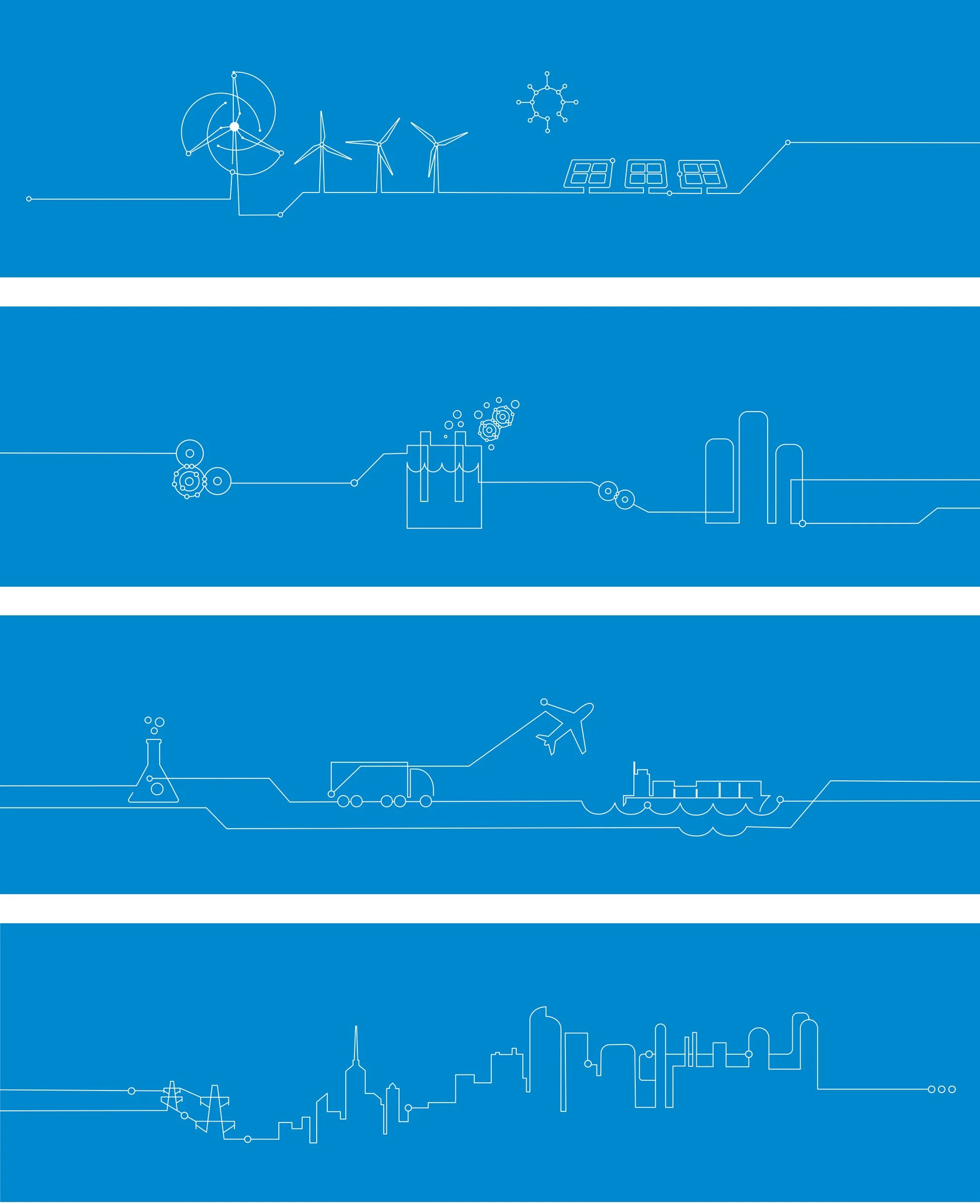
Once the final direction was approved, I moved into creating detailed illustrations, icons, and layouts. The concept featured line art graphics applied along the barriers to illustrate the clean hydrogen energy process. This approach aligned with other visitor experience graphics across the campus, maintaining a cohesive visual language. Accuracy was essential, so I collaborated closely with the lead researcher and communications specialists to ensure all content was scientifically accurate and aligned with corporate communication and brand standards.
During this phase, I also worked with the project manager and visitor experience team to coordinate with vendors and facilities staff. Together, we conducted site walkthroughs, gathered estimates, and developed production timelines and budgets. At the same time, writers began developing content for the signs to ensure that the visuals and messaging evolved together as a cohesive system.
Illustration and Icon Development
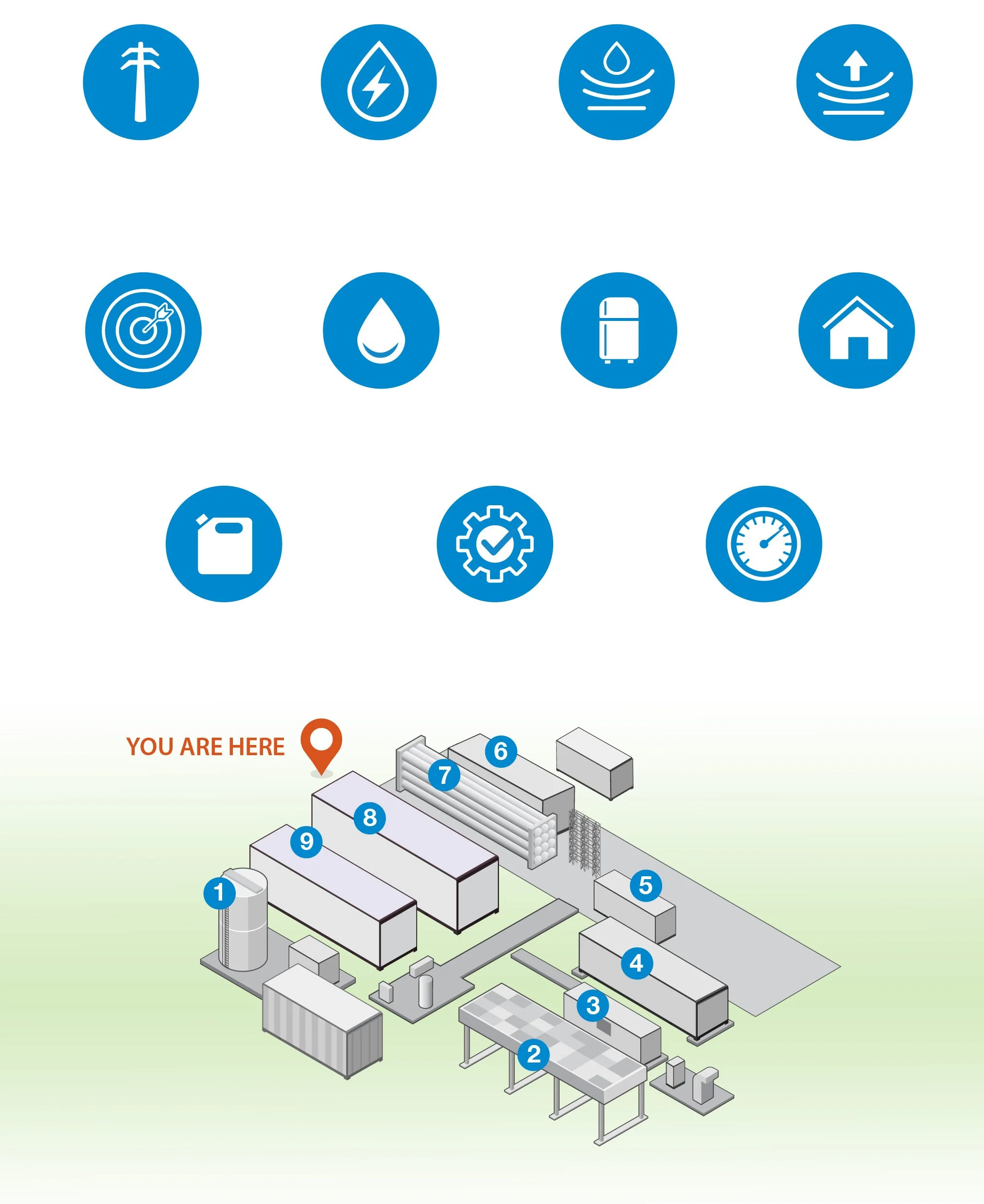
This phase focused on developing a cohesive set of illustrations and icons to visually explain key stages of the hydrogen energy process, structural components, power capabilities, and the system’s goal of advancing innovative energy solutions. Each element was designed to guide viewers through the story while maintaining scientific accuracy and consistency with NREL’s brand standards. I created a visual system that complemented the larger barrier graphics, ensuring clarity, cohesion, and alignment across all components of the display.
Final Sign Layout
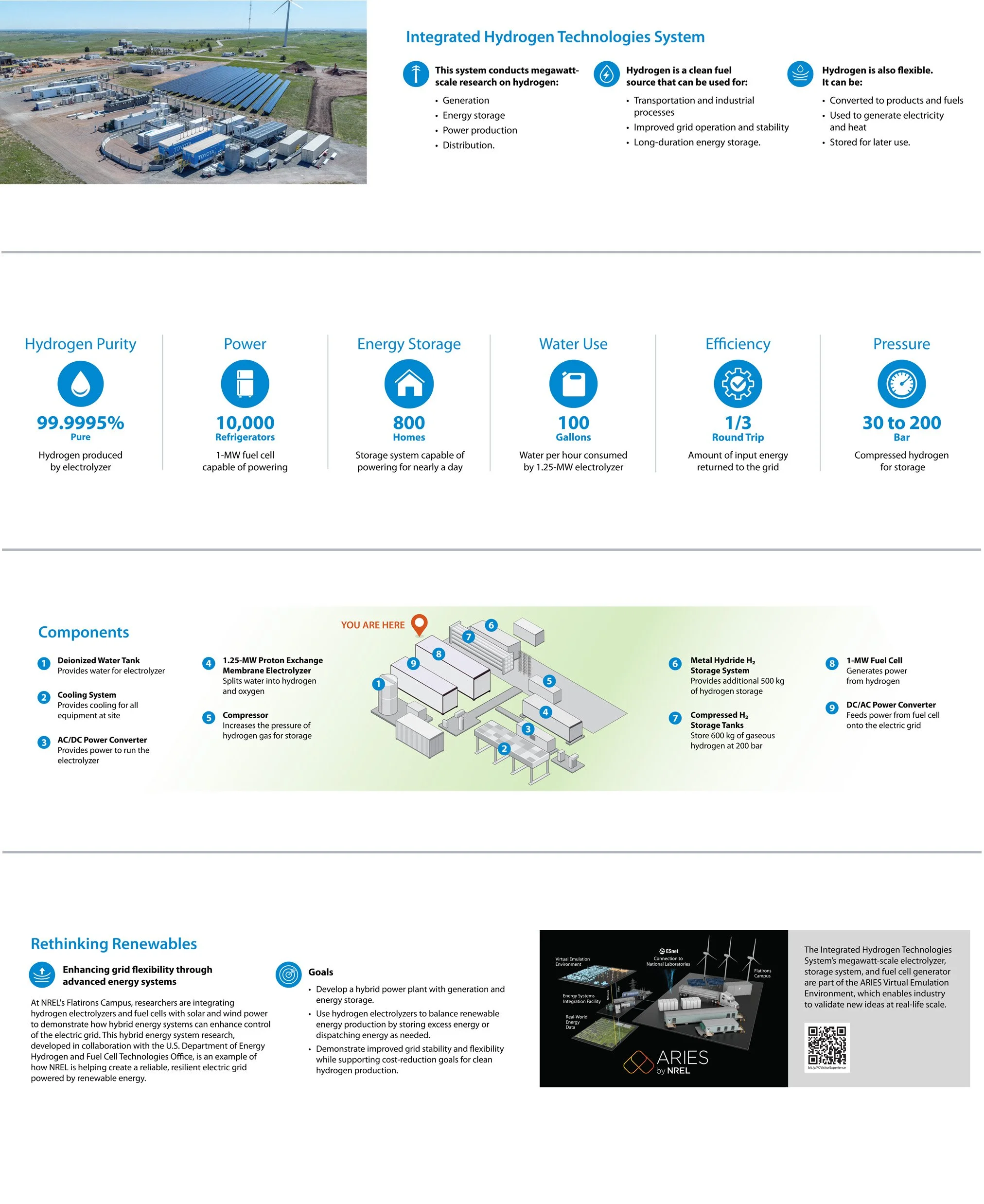
In this phase, I created the final sign layouts using the approved graphics, photography, and copy. Working closely with the project manager and stakeholders, I guided the review process through multiple rounds of feedback and revisions to ensure every detail met design, technical, and brand requirements.
During this time, the sign company began fabricating the custom signage based on the engineers’ specifications, coordinating with our team to align materials, dimensions, and finishes with the approved design.
Final Art and Production
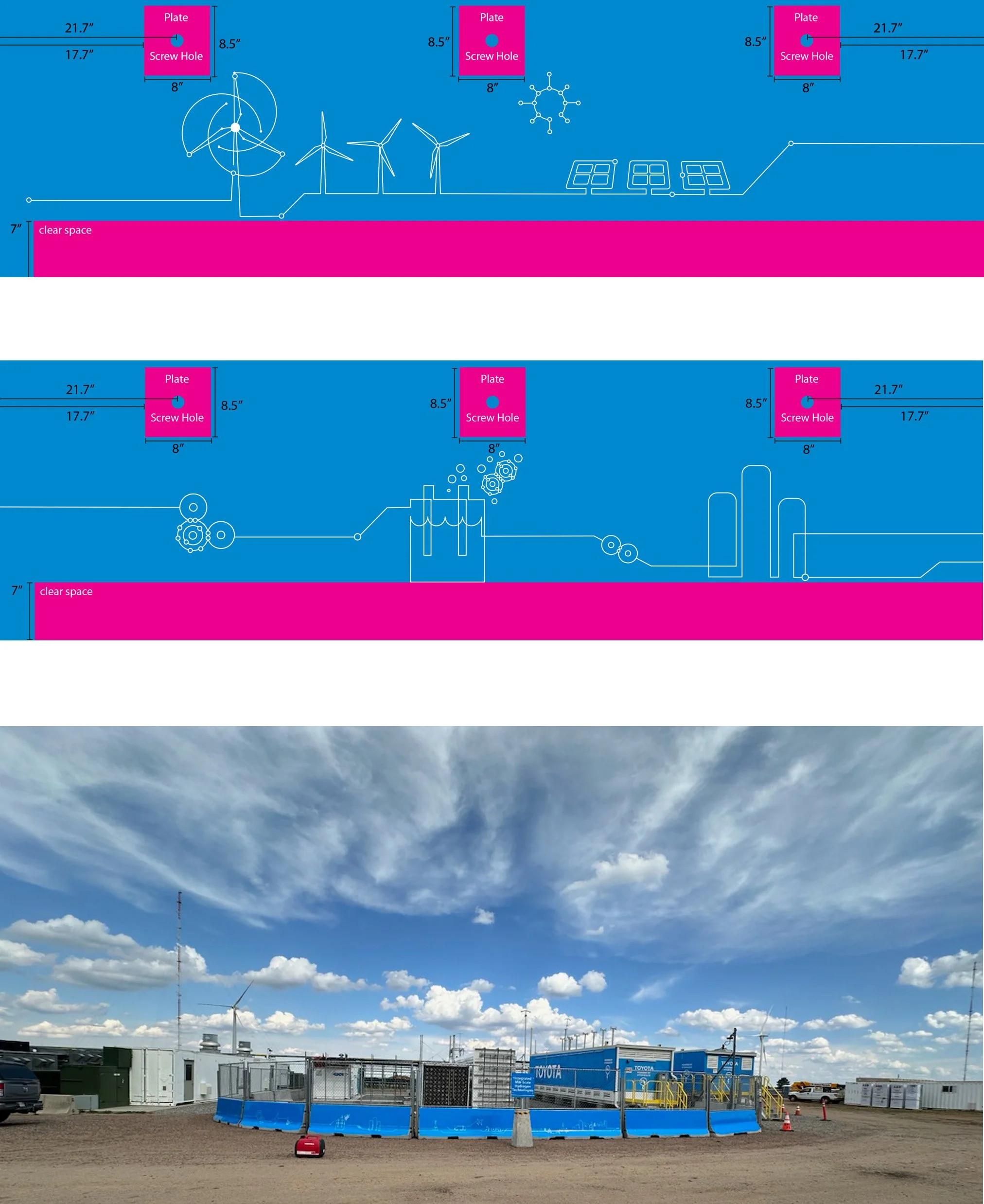
In this phase, I prepared and delivered the approved high-resolution artwork to the vendor, including detailed specifications for sign placement, drill holes, and alignment to ensure the graphics were installed accurately and not obscured by hardware. I reviewed and approved all printer proofs, confirming that every stakeholder had reviewed and provided final sign-off. Additionally, I verified that all material specifications met NREL’s environmental and safety standards before production and confirmed that the installation process and schedule were in place with all necessary teams.
Installation
and Completion
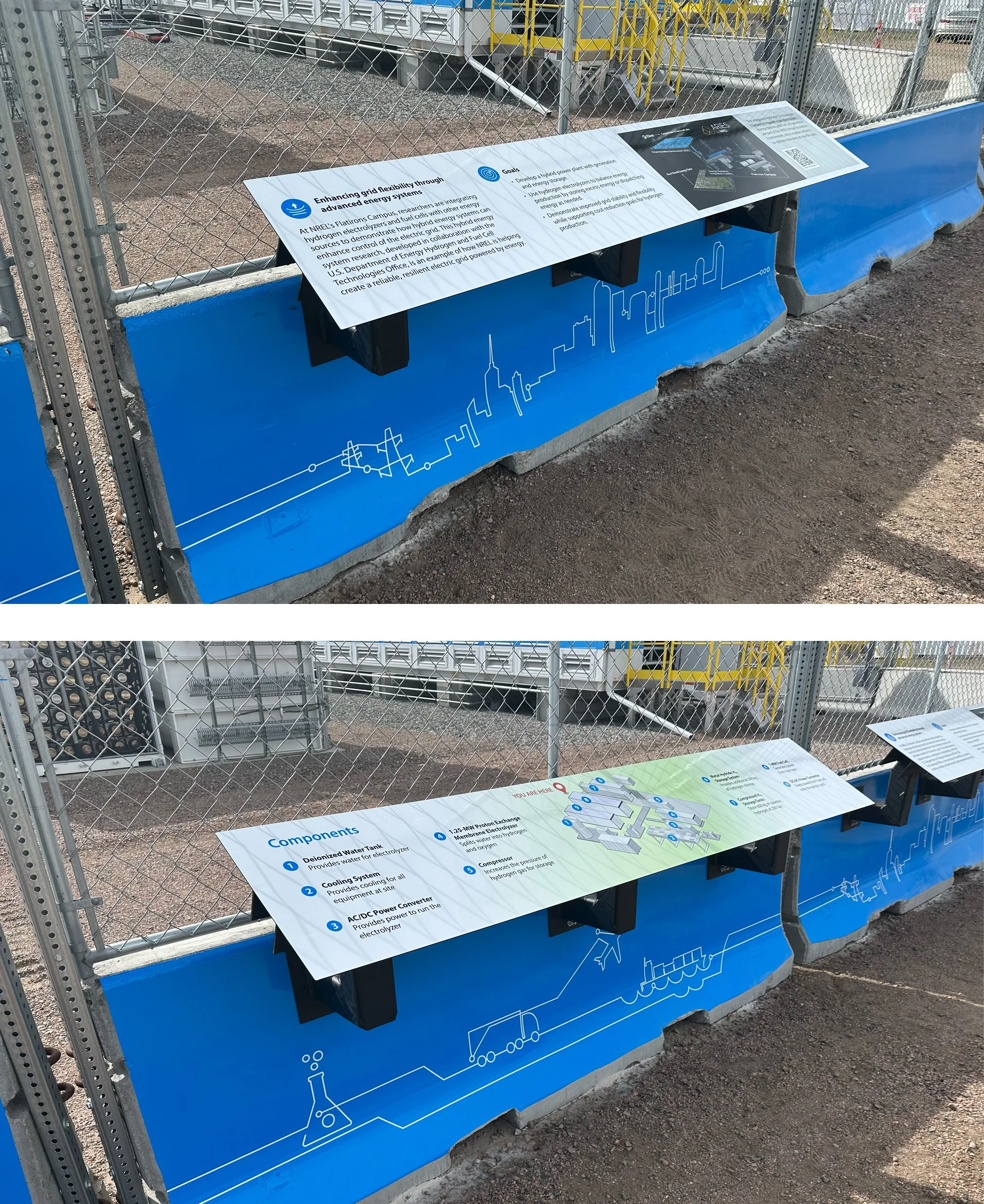
Before installation began, all barriers were power washed to create a clean surface for the graphics. Vendors installed the barrier vinyl under facility supervision, adhering to all heat and safety guidelines. Once the graphics were in place, the NREL facilities team mounted the custom signs on the barriers, followed by the installation of the final sign graphics. The completed display successfully brought together months of design, coordination, and collaboration between teams.
The completed installation transformed a complex research topic and physical space into a clear and engaging visual experience for a broad range of audiences, including visitors, researchers, and influential decision-makers. The display is regularly featured during guided tours and high-level briefings, helping audiences understand the process and impact of hydrogen energy systems and grid integration. Beyond its educational value, the project strengthened collaboration among design, engineering, architecture, and communications teams, establishing a scalable framework for future visitor experience initiatives at NREL.